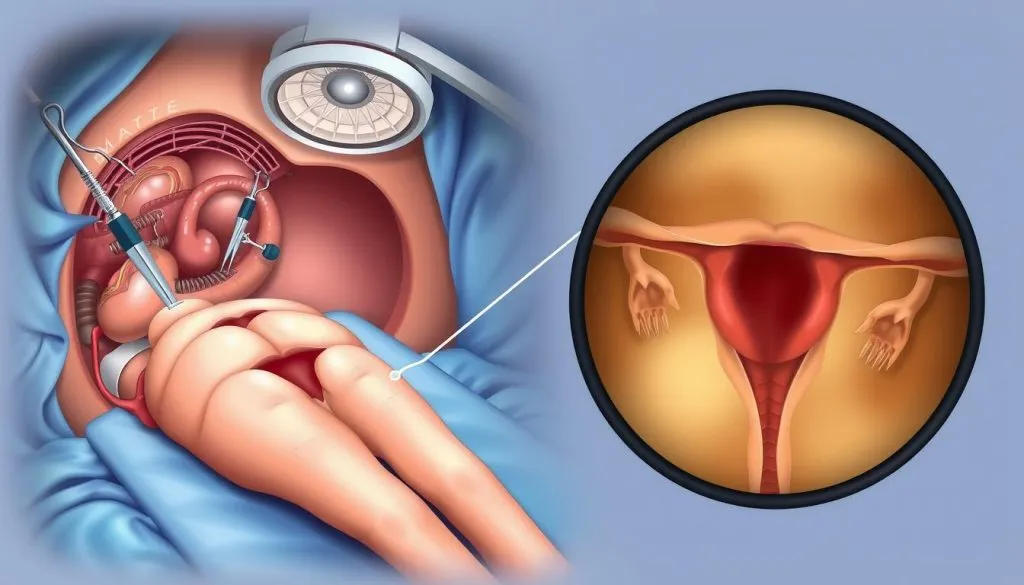
Ovarian Cyst Surgery in Indirapuram
Ovarian Cyst Surgery
An ovarian cyst is a fluid-filled sac that forms on or inside an ovary. Most cysts are harmless and go away on their own. However, large or persistent cysts may require surgery.
When Is Surgery for Ovarian Cysts Necessary?
Doctors may recommend surgery if:
- The cyst is larger than 5-10 cm
- It causes pain or discomfort
- It shows signs of cancer
- It doesn’t go away after several menstrual cycles
- It twists the ovary (ovarian torsion)
- It ruptures and causes bleeding
Early diagnosis leads to better outcomes and safer procedures.
Types of Ovarian Cyst Surgery
-
Laparoscopic Surgery (Keyhole Surgery)
This minimally invasive surgery uses small cuts and a camera. It’s the most common method. It offers:- Faster healing
- Less pain
- Minimal scarring
- Short hospital stay
-
Laparotomy
For larger or potentially cancerous cysts, doctors perform open surgery. It involves a larger cut in the abdomen. Recovery takes longer, but it allows better access to the ovaries. -
Oophorectomy
This surgery removes one or both ovaries if the cysts are severe or cancerous. It is done when preserving the ovary isn't safe. -
Cystectomy
Only the cyst is removed, leaving the ovary intact. This is ideal for women wanting to preserve fertility.
Before the Surgery: What to Expect
Before surgery, your doctor may order:
- Pelvic ultrasound
- Blood tests (like CA-125 to check for cancer)
- Urine tests
- Pregnancy tests
You may need to avoid food and drink the night before surgery. Discuss all current medications with your doctor.
Recovery After Ovarian Cyst Surgery
Recovery time depends on the type of surgery:
- Laparoscopy: 1–2 weeks
- Laparotomy: 4–6 weeks
Expect mild pain, bloating, or fatigue. Pain medication and rest help healing. Follow-up visits ensure proper recovery.
Post-Surgery Tips
- Avoid lifting heavy objects
- Keep incisions clean and dry
- Follow your medication schedule
- Resume activities slowly
- Watch for signs of infection or complications
Possible Risks and Complications
Like all surgeries, there are risks:
- Infection
- Bleeding
- Damage to nearby organs
- Reaction to anesthesia
- Recurrence of cysts
Most complications are rare with skilled care.
Impact on Fertility
Many cyst removal surgeries do not affect fertility. In fact, removing harmful cysts may improve chances of conception. If an ovary is removed, the remaining one can still function. Always discuss fertility concerns with your doctor beforehand.
Emotional Wellbeing After Surgery
It’s normal to feel anxious or emotional. Hormonal changes, physical recovery, and stress can impact mood. Support from family, friends, or a counselor helps greatly.